96 K-Lite Radio Memories
Thursday, 05 August 2010 | by Pat's Picks
While in Canada last weekend I had a chance to get together with some of the gang from my first gig in radio news. I did the Saturday and Sunday “96 Second News Updates” on CKRA, which was known at the time as 96 K-Lite FM.
The Edmonton “lite rock” station had assembled a particularly dedicated and talented group of employees in the late 1980s. Since I had no frame of reference, I didn’t fully appreciate the quality of the staff and only later did I realize that it would become one of those times I’d refer to as the “good ol’ days.”
I’ll always be grateful to K-Lite’s news director Grant Ainsley for taking a chance when he hired me in September of 1988. My experience at the time consisted of:
- a lot of homemade radio tapes
- a couple of dozen volunteer news reports for the University of Alberta campus radio station CJSR
- and about 20 hours of coaching in Grant’s community college class, which was really intended to give print journalists a brief introduction to radio.
Grant informed me that he had an open job, interviewed me, and eventually invited me in for a follow-up meeting. “I don’t know why I’m doing this,” he said. “But you’ve got natural talent and I want to take a chance on you.” He went on to explain that there were people at radio stations in nearby small markets like Red Deer and Fort McMurray who’d been paying their dues for 2 or 3 years and would be “easier” to hire. But he wanted to offer me his part-time radio newscaster job because he had a hunch it would work out.
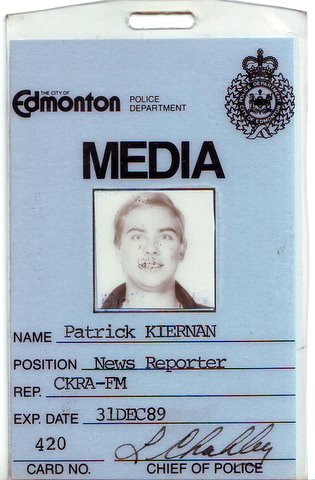
In hindsight, I don’t really know why Grant thought it would work out. Because I needed a lot of practice. Here’s how my practice newscast sounded in Grant’s class in May 1988:
I guess Grant saw enough potential and knowledge about the news that he hired me for $1000 a month to do Saturday and Sunday morning newscasts and report one night a week. It was the kind of on-the-job training opportunity every aspiring broadcaster dreams of. I had a pretty good sense of how to tell a story, but Grant drove home the importance of good storytelling. He insisted that we localize a story whenever possible by working the phones for a fresh angle. And even though the main reason we did so many newscasts was that the government required us to, it was made clear to us that we must take our journalism seriously. (But not so seriously that we were above paying $96 for the best news tip of the month.)
Eventually, the sound got better. There were some rough spots. Program Director Len Thuesen, known for his high expectations and unfiltered feedback, made it clear when I was late for a newscast that it would be the last time that would happen. It was. And Station Manager Warren Holte arrived one Saturday morning to see that I’d chosen to spend my lunch break napping on the breakroom sofa. He was unimpressed and wasn’t really interested in hearing how I was free to use my lunch break in any manner I chose.
On Saturdays and Sundays there were usually only two employees in the building. Most often, I was paired with announcer Brad Edwards, a talented broadcaster who had almost limitless patience for the people who called the station for information because they thought we knew everything. I also recall some great conversations with Dale Wolfe, who came into the newsroom one night in December to discuss his top two choices for the #1 song on the “96 Top Songs of 1988” show. It was between Bobby McFerrin’s “Don’t Worry Be Happy” and something not particularly memorable from Taylor Dayne or Pebbles. (I voted for McFerrin and Dale locked it down as our #1.)
My weekly reporting responsibility was to cover city council meetings in the bedroom communities of Leduc and St. Albert. I returned from my first meeting with horrible audio clips. The content of the clips was fine, but I had recorded the sound of the meeting from across the room and it was barely understandable. Grant uttered the words of doom: “not broadcast quality.” He insisted that I do better and taught me how to get the microphone closer to the person who was speaking, or next to a speaker connected to the building sound system. That lesson sunk in so deep that I still quote Grant two decades later when a young reporter returns with bad audio.
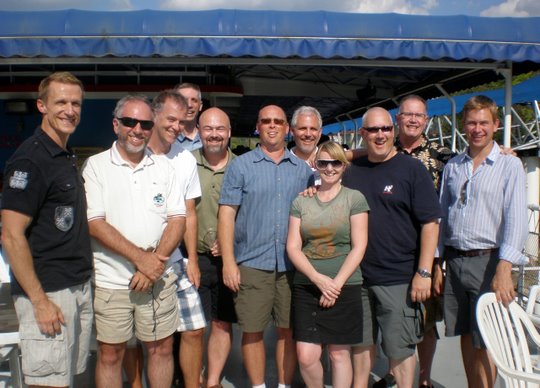
At our informal reunion we had an interesting discussion about the future of radio. Short-sighted managers are making radio less local at a time when local is the best thing radio has going for it. “Commercial free music” and “less talk” don’t really interest me anymore, because I have an iPod that delivers a personalized music mix. But a combination of music, local news, weather, traffic and community events is still relevant. Station managers ought to keep that in mind or they’ll put themselves out of business.
I was only at CKRA for about a year before television came calling. But it was a pivotal year in my career and it was fun to reflect on it this past weekend. Some audio and video clips from the station in the late 1980s and early 1990s are below.
VIDEO: Announcer BJ Doyle’s home video tour of the station May 17, 1987 (with Ken Dawson and Dale Wolfe)
AUDIO: 96 K-Lite intros and promos
VIDEO: ITV News reporter Wendy Theberge visits Len Thuesen and the morning crew (circa 1989)
AUDIO: “Lenny in the Morning” April 4, 1988
VIDEO: Station profile by CFRN Eyewitness News reporter Garnet Lewis (a K-Lite alum)
(Thanks for Radiofan at radiowest.ca for posting some of the K-Lite archival clips)
